Purpose of the service
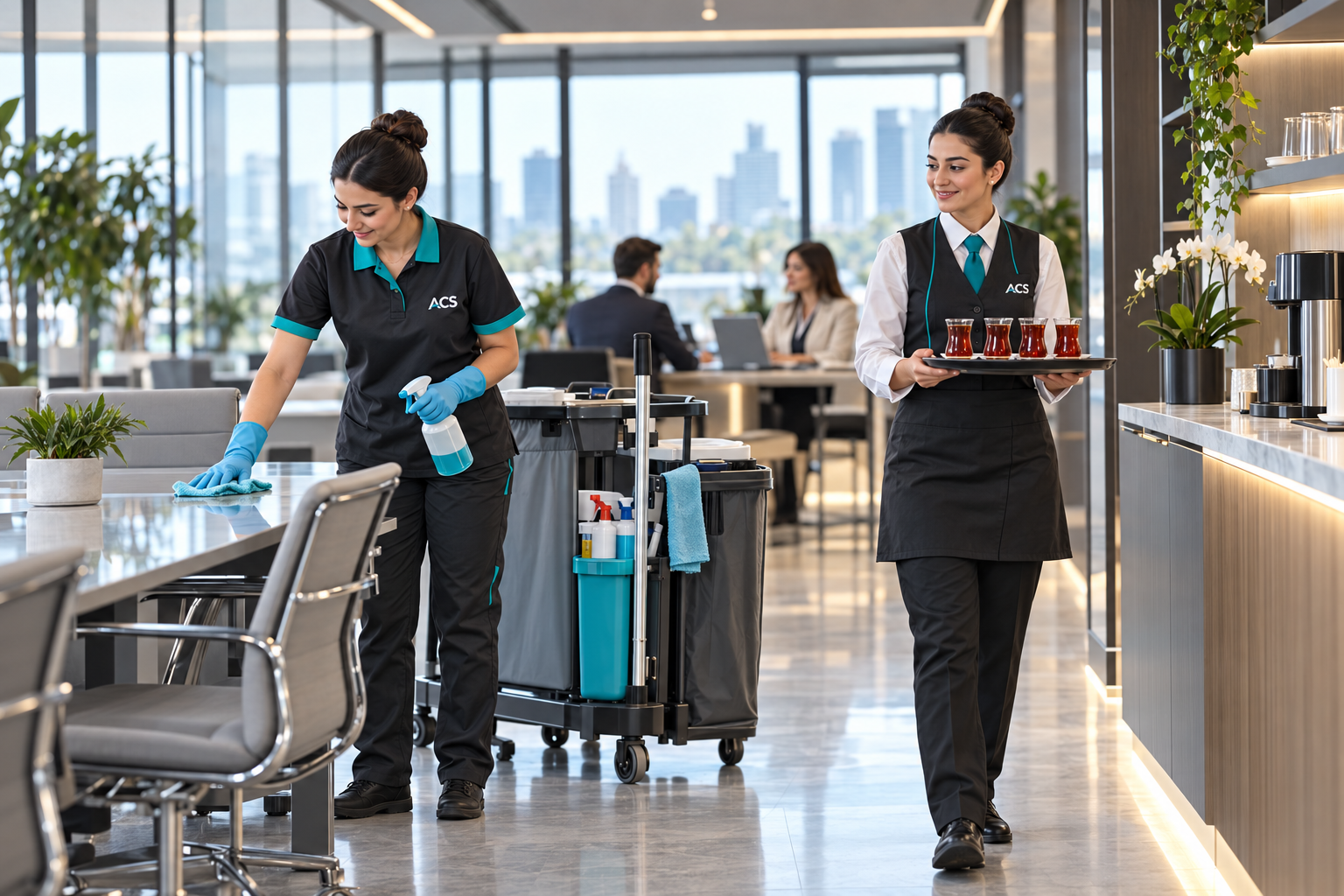
Cleaning, kitchen, tea and catering staff support the hygiene, order and daily refreshment needs of working environments through a planned team structure. Space usage, working hours and service expectations are used to create a practical task plan.
The service is more than personnel supply. Task allocation, area and material follow-up, shift continuity, kitchen flow and field standards are managed together around the daily rhythm of the business.
Service scope
The scope may include office and common-area cleaning, hygiene points, kitchen support, tea and catering service, meeting preparation, material follow-up, task lists and periodic field checks. Full-time or shift-based models can be planned.
- Full-time staffing plan
- Area and shift planning
- Catering support staff
- Cleaning team organisation
- Materials and task follow-up
- Field quality control
How does this service work?
We assess the purpose and size of areas, peak usage hours, hygiene priorities and kitchen needs. We then define task lists, shift structure, team size and the control method.
- 01
Analyse areas, usage hours and cleaning or catering needs.
- 02
Plan zones, shifts and team responsibilities.
- 03
Coordinate onboarding, area procedures and daily flow.
- 04
Follow standards through control lists, feedback and field reports.
Business value
Consistent cleaning and catering support directly affects employee experience and visitor reception. Standardised duties reduce service interruptions during peak hours and make ownership clearer.
ACS coordination follows leave, shifts and personnel continuity together with the wider operating plan. The business can record area-based tasks and feedback to set improvement priorities.
Who is it for?
The service is suitable for offices, plazas, stores, educational organisations, healthcare facilities, factories, hotels and any business requiring regular cleaning or catering flow.
Continuity and measurement
The first planning stage for full-time cleaning and catering staff begins by defining role responsibilities and success measures. The business shares its locations, working hours, team size and priorities. ACS combines this information with the personnel, shift and communication plan. This makes the scope clear from the beginning and reduces role ambiguity and repeated coordination.
During delivery, daily communication, shift continuity and task follow-up move through the same operating flow. Business feedback is used not only to solve issues but also to improve the service standard. When needed, role priorities, team distribution and working hours can be reviewed together.
Regular reviews and reporting show whether the service is progressing within the agreed scope. Depending on the service, the team may follow measures such as task completion, attendance, registration or data quality, response times and business satisfaction.
The service can be scaled when the scope or operating model changes. New locations, additional shifts, seasonal intensity and role changes can be added to the existing plan in a controlled way.
Cleaning and catering personnel are employed by ACS; work schedules, payroll, social security, personnel administration and field standards are managed by ACS.
We build cleaning and kitchen teams around your intensity, usage hours and shift pattern while ACS manages schedules, payroll, social security, personnel administration and field standards.
Understand the service model.
What duties can cleaning and kitchen staff cover?
Area cleaning, hygiene, kitchen support, tea and catering service, meeting preparation, material and task follow-up can be planned.
Are full-time and shift options available?
Yes. Full-time or shift-based teams can be designed around working hours, peak periods and space usage.
How is the service standard checked?
Area task lists, field checks, business feedback and periodic reports are used to follow the service standard.
Can material follow-up be included?
The use and replenishment needs of cleaning, kitchen and catering materials can be added to the task plan.
How is continuity protected when staff changes?
ACS follows shifts and personnel administration, while task definitions and control lists help new personnel adapt consistently.